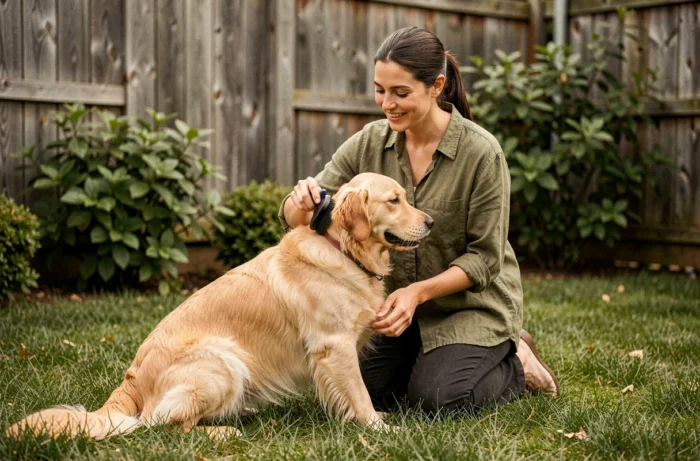
A dog that scratches frantically after every walk in the woods, a bowl of kibble left out all day that eventually leads to weight issues, a veterinary dental cleaning costing several hundred euros because the dog’s teeth have never been touched: these situations are common in most households. Taking care of your dog daily relies on a few specific routines, provided you know which ones really matter.
Post-walk inspection: the gesture most owners rush through
After each outing, we tend to unclip the leash and move on. This is exactly where grass seeds, ticks, and micro-cuts go unnoticed. The Ministry of Agriculture recommends inspecting your pet after every walk to check for injuries, ticks, or grass seeds.
Specifically, you should run your hands between the pads, behind the ears, under the armpits, and around the perineal area. Grass seeds can migrate under the skin within hours, and a engorged female tick transmits pathogens much more easily than a tick spotted in the first few hours.
If your dog comes back muddy from a river swim or a stroll through the underbrush, a simple rinse with clear water is sufficient. Using shampoo every time weakens the skin’s lipid barrier. Feedback on this point varies by breed, but the basic rule remains to limit baths with products to a few times a year, unless advised otherwise by the veterinarian.
To delve into the specific needs of each breed and find suitable guides, you can visit Amazing Pet Place for dogs and compare recommendations by size.
Dog nutrition: adjust the portion rather than follow the label
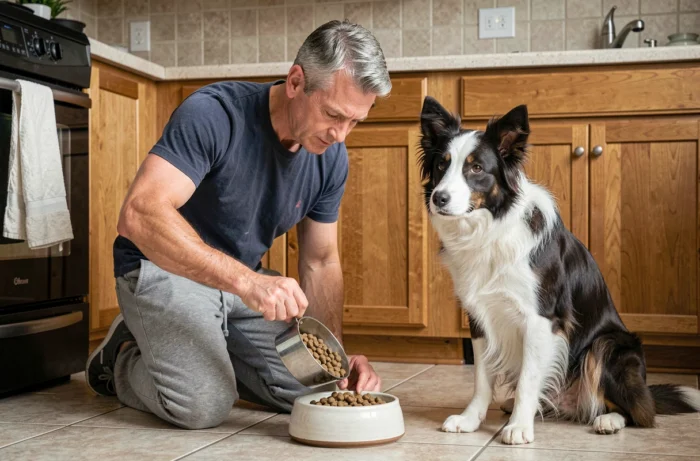
The portion indicated on the kibble package is calculated for an average dog, moderately active, at a theoretical weight. In practice, a Brittany spaniel that hunts three hours a week does not have the same needs as a French bulldog that takes two laps around the block each day.
Weighing the daily portion with a kitchen scale eliminates the primary factor of overweight in domestic dogs. We often fill the bowl “by eye,” and the caloric drift sets in within weeks.
Here are some concrete guidelines for adjusting the diet:
- Feel the dog’s ribs once a week: you should be able to feel them without pressing hard, without seeing them protrude. If you can no longer feel them, the portion is too generous.
- Split into two meals a day rather than one, to reduce the risk of stomach torsion in large breeds and improve digestion.
- Avoid abruptly changing brands or types of food: a transition over five to seven days by mixing old and new food reduces digestive issues.
Fresh water available at all times is a basic point, but we still see empty bowls at the end of the day in many households, especially in summer.
Dog dental care: a neglected area that costs a lot
Oral health is the neglected aspect of daily dog care. The majority of dogs over three years old show early signs of periodontal disease, and dental cleaning under general anesthesia represents a significant budget at the veterinarian’s.
Brushing your dog’s teeth two to three times a week with toothpaste formulated for dogs slows down tartar formation. A silicone finger brush is used for reluctant dogs, starting with the canines and premolars, where tartar accumulates the fastest.
Alternatives to brushing (chew sticks, natural bones, dental toys) help, but do not replace the mechanical action of the brush. They complement cleaning, without eliminating it.

Parasite control and vaccination: the schedule that protects your dog
Treating your dog for fleas and ticks is not optional. Fleas cause allergic dermatitis, and some ticks transmit piroplasmosis, which can be fatal. The external anti-parasitic treatment must be renewed according to the product used (spot-on, tablet, collar), and a delay of a few weeks is enough to expose the dog.
For internal parasites, regular deworming remains the norm. The frequency depends on the lifestyle: a dog that eats prey or lives with young children requires more frequent treatment.
Regarding vaccination, the basic protocol covers the most serious diseases (canine distemper, parvovirus, leptospirosis). The annual booster at the veterinarian’s is also an opportunity to conduct a general health check: weight, joints, skin condition, behavior.
Regulatory framework in France: what has changed for dog owners
Since January 1, 2024, the sale of dogs and cats in pet shops is banned in France, following the law of November 30, 2021, against animal cruelty. Adoption or purchase now goes through registered breeders, shelters, or associations.
Fines for mistreatment have been raised to the 5th class, with penalties reaching up to 1,500 euros, or even 3,000 euros in case of repeat offenses. The prohibition of keeping an animal becomes a primary penalty, and a national registry of individuals banned from ownership has been created to facilitate inspections.
These measures do not only concern extreme cases. A dog left without water in high heat, an animal permanently confined without outings, or a lack of identification fall within the scope of possible sanctions. Knowing these obligations is an integral part of the daily care provided to your dog.
Ultimately, caring for a dog daily comes down to short but regular routines: inspecting after walks, weighing the portion, brushing teeth, adhering to the anti-parasitic schedule. Each of these habits takes a few minutes and avoids much heavier veterinary consultations in terms of time and budget.