A flower bed bursting with colour in May, then a dull garden from September onwards: most gardens go for months without a single flower in bloom. The problem isn’t how many plants you have, but whether their flowering periods overlap. Choosing flowers for a garden that blooms all year round means planning a succession of blooms rather than making one-off choices based on what catches your eye.
Soil, exposure and local climate: what to assess before buying
Before browsing a catalogue, take a look at your garden. Heavy clay soil doesn’t suit the same perennials as sandy, free-draining soil. Exposure matters just as much: a south-facing flower bed dries out quickly in summer, while a north-facing corner stays cool but gets little direct sunlight.
Have you ever noticed a plant bought from a garden centre starting to wilt after just a few weeks? Often, the problem is a mismatch between its needs and the actual conditions in the garden. Choosing flowers to suit your soil and exposure prevents most failures.
Here’s a simple example. Hydrangeas prefer partial shade and acidic to neutral soil. Planted in full sun in dry, chalky soil, they struggle, turn yellow and barely flower. By contrast, gazanias, which are used to poor soil and scorching sun, will rot in a damp, shady flower bed. Before planting, get into the habit of checking three practical factors:
- The type of soil (clay, loam or sand) and its drainage, which you can check by digging a thirty-centimetre hole and seeing whether water remains after rain
- The flower bed’s actual exposure to sunlight, observed over a full day, since a sunny spot in the morning may be in shade by midday
- Your garden’s microclimate: a nearby wall that stores heat, a hollow where late frosts settle, or prevailing winds that dry out foliage
Among the flowers from Tradition Jardin, you’ll find varieties suited to a wide range of conditions, making it easier to narrow down your choices before planting.
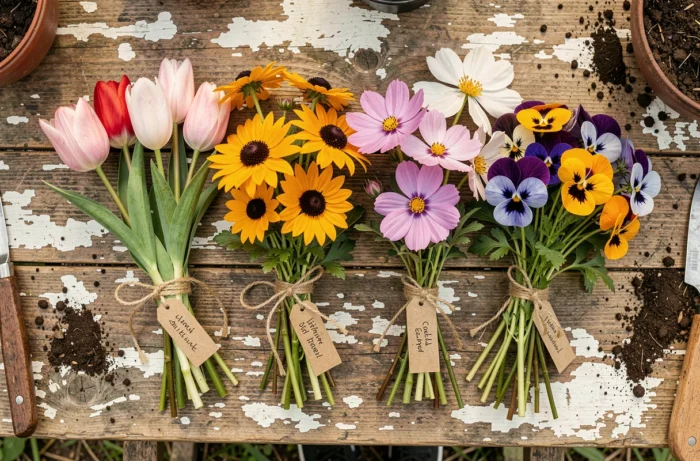
Succession planting calendar: pairing plants season by season
The idea is simple: as one plant finishes flowering, another begins. The aim isn’t to keep a flower bed covered in blooms all the time (which is unrealistic anyway), but to create a succession of blooms that avoids completely flowerless months.
Late winter and early spring
Bulbs get the season started. Snowdrops and crocuses bloom first, followed by daffodils and tulips as temperatures rise. These plants store energy in their bulbs and tolerate the cold. They then die back, making way for spring-flowering perennials.
Hellebores, sometimes called Christmas roses, flower as early as January in temperate regions. They tolerate partial shade and add colour while the rest of the garden is still asleep.
Summer and peak heat
This is the season with the widest choice. Lavender, coneflowers, gaura and rudbeckia: summer perennials flower for a long time if you regularly remove spent blooms. This light pruning, known as “deadheading”, encourages new buds to form.
Removing spent blooms can extend flowering by several weeks. It’s a simple task that can dramatically change the look of a summer flower bed.
Watch out for drought. Gardeners have observed that some perennials stop flowering during heatwaves, then start again in autumn when moisture returns. This second flush is never guaranteed, especially for young plants whose roots are still fragile.
Autumn and the start of winter
Asters, Japanese anemones and chrysanthemums take over from September to November. Ornamental grasses (miscanthus, stipa) add movement and remain attractive even when dry, long after the first frosts.
Evergreen foliage and ornamental grasses fill the gaps when nothing is in flower. A garden that looks “in bloom” all year round also relies on texture and shape, not just petals.
Invasive alien species: a pitfall to avoid when choosing plants
Some plants sold at garden centres are now banned or strongly discouraged. Himalayan balsam is one example: prized for its abundant pink flowers, it escapes from gardens and colonises riverbanks, smothering native vegetation.
Why bring this up in an article about flowers? Because choosing an invasive species can mean you’re required to remove it and may result in penalties. Before buying an attractive exotic plant, check that it isn’t on the EU list of invasive alien species of concern.
There are plenty of native alternatives. Foxgloves make an excellent substitute for Himalayan balsam in shady areas. A native climbing honeysuckle is just as fragrant as tropical jasmine and much hardier.
Low-maintenance care for long-lasting blooms: what makes a difference
A garden that blooms all year round doesn’t necessarily need daily attention. It needs the right care at the right time.
- Mulch flower beds in spring with a few centimetres of wood chips or straw to reduce watering and protect roots from frost the following winter
- Divide perennials every three to four years, in autumn or early spring, to rejuvenate clumps and encourage flowering
- Group plants with similar water needs in the same flower bed to make watering easier and avoid drowning a lavender plant just to keep a neighbouring hosta happy
- Leave the dry stems of grasses and some perennials in place until late winter: they protect the crowns from the cold and provide shelter for insects
Grouping plants by their water needs reduces watering and plant losses. This often-overlooked principle can make the difference between a flower bed that merely survives and one that thrives.
A colourful garden twelve months a year depends less on the number of varieties planted than on how well they complement one another. Soil, exposure, a succession of blooms throughout the seasons, choosing permitted species and targeted care all work together. The first step is always the same: observe your garden before opening a catalogue.