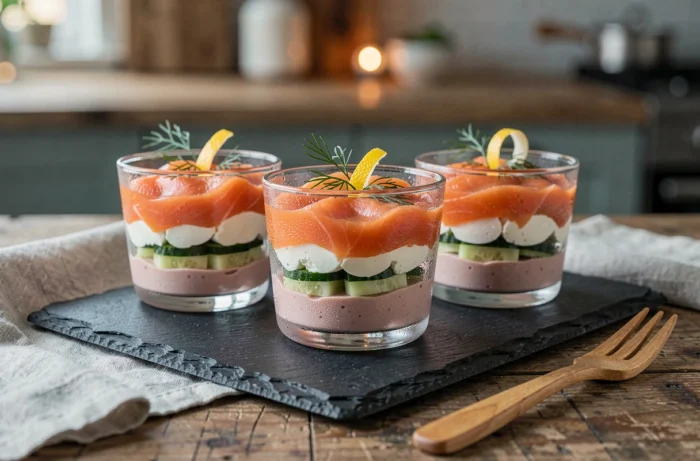
A savory verrine prepared the day before is based on a simple technical principle: layering textures and flavors that stabilize in the cold without degrading. Unlike a canapé or toast, the verrine protects each layer thanks to the walls of the container, which limits oxidation and drying out. This characteristic makes it a format particularly suited for anticipation, provided you master a few rules of assembly and preservation.
Textures that hold up in the cold: choosing the right ingredients for your savory verrines
Not all preparations can withstand a night in the refrigerator. The verrines that “rest well” in the cold are those made with fresh cheese, roasted vegetables, or smoked salmon, whose texture remains stable after several hours. In contrast, raw vegetables that release water (cucumber, fresh diced tomato) can make the lower layers soggy and create an unappetizing liquid base.
The principle to remember: the more a preparation is emulsified or bound by a fatty substance, the better it ages. A beet mousse with fresh goat cheese, a salmon tartare seasoned with lemon, or an avocado cream stabilized with fresh cheese maintain their consistency and even develop their aromas after a night of resting.
For fragile ingredients (fresh herbs, sprouts, nut pieces), the most reliable method is to prepare everything separately and assemble just before serving. This act of final decoration added at the last moment preserves the crunchiness and visual contrast, two qualities that refrigerator condensation destroys in a few hours.
Several specialized sources, including sites like the one where this recipe is found on Vidéos du Net, emphasize this separation between assembly and finishing.
Smoked salmon and lemon cream verrines: a base to adapt
Smoked salmon remains one of the most reliable ingredients for a verrine prepared the day before. Its salt and fat content protects it from oxidation, and its flavor slightly intensifies when in contact with an acidic seasoning.
The most stable combination features a layer of thick fresh cream mixed with lemon zest and juice, topped with slices or flakes of smoked salmon. The acidity of the lemon firms up the cream and slows down bacterial growth, extending its shelf life.
Variations to break away from the classic
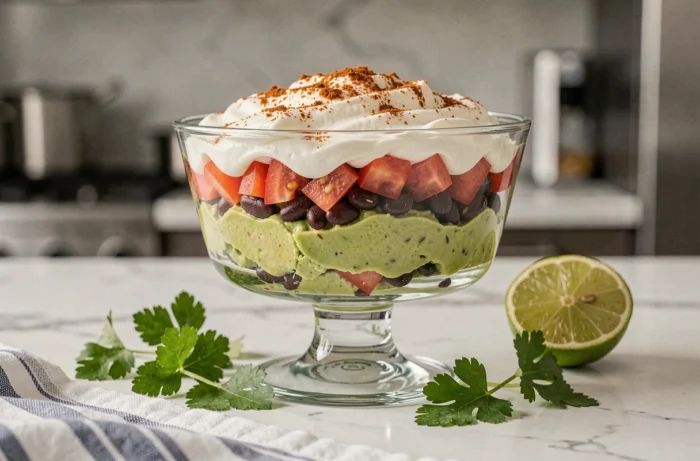
By replacing the lemon cream with an avocado mousse (avocado blended with fresh cheese and a few drops of lime), you get a richer verrine that holds up just as well in the cold. The avocado, once blended and protected by acidity, does not brown on the surface if the verrine is covered.
Another variation: substitute the smoked salmon with shredded crab. Crab provides a finer texture and a different briny flavor. The assembly remains the same, but you can add a hint of Espelette pepper to the cream for an extra kick.
No-cook verrines for a quick appetizer
The majority of savory verrines to prepare the day before require no cooking, simplifying logistics. The assembly boils down to three operations: blend, season, layer.
- Beet-goat cheese verrine: cooked beet blended into a smooth puree, layer of fresh goat cheese whipped with a spoonful of cream, a few walnut halves added on the day for crunch.
- Mushroom-ham cream verrine: sautéed and cooled mushrooms, ham cream blended with fresh cheese, a dash of nutmeg. Cooked mushrooms absorb little moisture and retain their texture after a night in the cold.
- Salty tiramisu-style verrine: layer of salted mascarpone seasoned with herbs, quickly dipped savory biscuits, topped with sun-dried tomatoes or cured ham. The layered, soaked assembly gains cohesion after several hours of resting.
These three recipes cover different flavor profiles (earthy, smoky, Italian) while adhering to the same principle of stability in the cold.
Container and preservation: the details that change the result
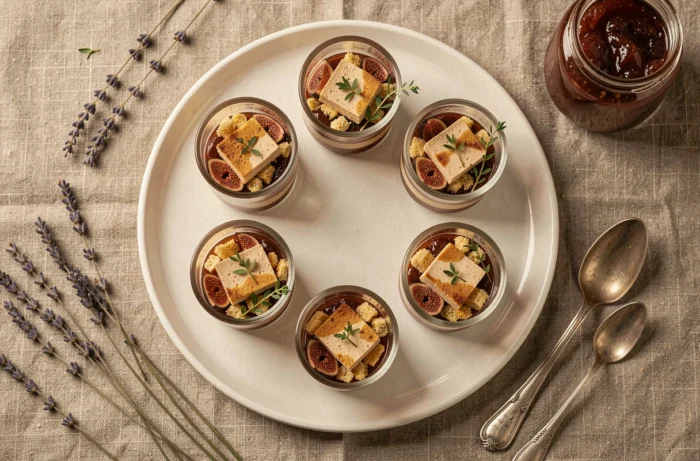
The choice of container directly influences the final quality. Verrines with thick walls or rigid models with airtight lids limit condensation and prevent refrigerator odors from penetrating the preparation. A plastic wrap placed in contact with the surface serves the same purpose if you use open verrines, but the result is less neat.
The ideal storage temperature is around 4 °C, according to recommendations from Anses relayed by Top Santé. This point is particularly relevant for verrines containing dairy products or smoked fish. For sensitive populations (pregnant women, immunocompromised individuals), it is advisable to favor preparations made with pasteurized milk rather than raw milk cheese.
Assembly order to avoid migrating layers
The basic rule: the densest layer goes at the bottom. A vegetable puree or thick mousse provides a stable base on which lighter elements (whipped salted cream, fish flakes) can rest without sinking.
If you are preparing multiple verrines, fill them all in series rather than one by one. This ensures a homogeneous distribution of layers and a consistent visual appearance at the time of serving.
Taking the verrines out of the refrigerator about fifteen minutes before serving allows the aromas to release. A preparation that is too cold seems bland, even if well-seasoned. This time for bringing to temperature is part of the recipe just as much as the assembly itself.