
You have just unmolded a well-risen cake thanks to a packet of baking powder. As you cut into it, a question crosses your mind: could this ingredient that makes the dough rise also increase the number on the scale? Baking powder regularly comes up in discussions about weight gain, often mixed up with other types of yeast. However, its role in cooking is purely mechanical, and its effect on body shape deserves to be examined closely.
Sodium and water retention: what baking powder really contains
Baking powder is not a living organism. It is a mixture of powders that react to heat and moisture to produce carbon dioxide. This gas creates the bubbles that make cakes and pancake batters rise.
Its composition relies on three elements: an acid (such as sodium pyrophosphate), a base (sodium bicarbonate), and a neutral carrier (often cornstarch). None of these components provide significant calories in the amounts used in cooking.
The key point lies elsewhere. Sodium bicarbonate contains sodium. In modest amounts, this is not a problem. But for those who accumulate homemade baking recipes or use baking powder in several daily preparations, sodium intake can discreetly add up.
An excess of sodium in the diet promotes water retention. The body stores more fluid to balance the concentration of salt, which can result in slight visible swelling, a tighter belly, or a feeling of heaviness. This phenomenon is often confused with fat gain. If you explore the link between baking powder and weight gain, this distinction between water and fat is the first key to grasp.
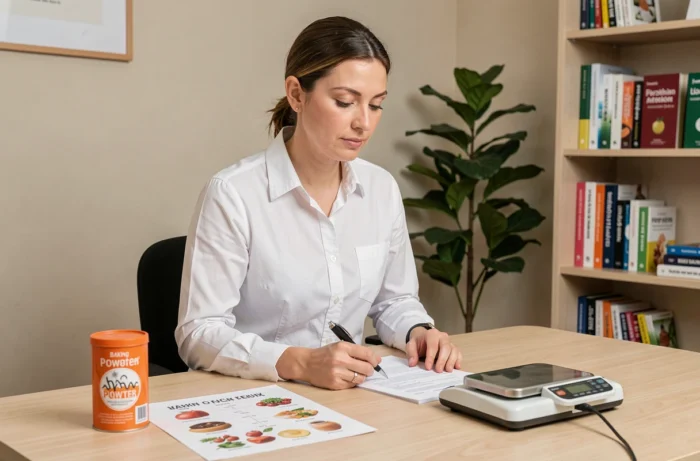
Fat gain or body water variation: the difference that no one details
When the number on the scale increases after a period of intensive baking, the classic reaction is to think of fat mass gain. In the majority of cases related to baking powder, the weight variation is temporary and related to water.
To accumulate body fat, a sustainable caloric surplus is required. Eating more calories than the body expends, day after day. Baking powder itself contributes almost nothing in this regard.
What makes a cake fattening are the other ingredients:
- Butter and fats, which concentrate a lot of energy in a small volume
- Sugar, which increases the caloric density of the preparation without providing lasting satiety
- Refined flour, which quickly raises blood sugar levels and can stimulate appetite in the following hours
Baking powder does not make you gain weight, but the recipes that use it can be very caloric. It’s a common mental shortcut: one associates the visible ingredient (the packet of baking powder) with the overall effect of the dish.
Baking powder, brewer’s yeast, baker’s yeast: frequent confusion in nutrition
Part of the confusion comes from the word “yeast” itself, used for radically different products.
Baker’s yeast is a living microorganism (Saccharomyces cerevisiae). It ferments the sugars present in flour and produces carbon dioxide, which makes bread rise. It contains proteins, B vitamins, and minerals.
Brewer’s yeast, sold as a dietary supplement, comes from the same microorganism but in dried or inactive form. It is often associated with benefits for hair, nails, and gut flora. Some people report an increase in appetite with brewer’s yeast, which can indirectly lead to eating more.
Baking powder, on the other hand, is not alive. No proteins, no vitamins, no effect on appetite. Its action is purely physicochemical. Confusing these three products is like comparing an electric motor, a thermal engine, and a spring on the grounds that they all produce movement.
Why this confusion persists
The packaging looks similar on the shelf. Common vocabulary does not make the distinction. And on social media, nutritional advice often mixes brewer’s yeast and baking powder in the same sentence, without specifying which one is concerned.

Precautions for those sensitive to sodium
For the vast majority of amateur cooks, a packet of baking powder in a cake poses no health concerns. The amount of sodium remains modest compared to the overall diet.
Vigilance concerns specific profiles:
- People suffering from hypertension, for whom every source of sodium counts in the daily balance
- Those on a low-sodium diet by medical prescription (renal insufficiency, heart failure)
- People prone to bloating or digestive issues, as the carbon dioxide produced in the stomach can amplify discomfort
The risk is not baking powder itself, but its accumulation with other sources of sodium in the diet: industrial bread, cold cuts, ready meals, sauces. For these profiles, replacing baking powder with baker’s yeast in certain recipes can reduce overall sodium intake.
Metabolism and body shape: refocusing the debate on overall diet
Focusing on baking powder to explain weight gain is like looking for a leak in a pipe while a window is wide open. The overall caloric balance determines body shape, not an isolated ingredient used in tiny amounts.
A packet of baking powder weighs about ten grams and is spread over several servings. Its caloric contribution per serving is negligible. What truly influences metabolism and body composition is the regularity of physical activity, the nutritional quality of meals, and portion management.
The next time you prepare a cake, focus your attention on the amount of butter and sugar in the recipe. Baking powder does its job of leavening without leaving a trace on your figure. The real lever lies in the frequency of consumption and the balance of your diet on a daily basis, not at the bottom of the packet.